Babies From Birth
Baby & Infant Swimming Lessons in Dubai
Private parent-and-baby swimming sessions for infants from birth — newborns start in your own bath, then graduate to your home pool. Gentle, water-safety-first coaching from instructors whose swimming-teaching qualifications are listed in their profiles, scheduled around your baby's naps, in English, Russian and Arabic.
No group classes · Same instructor every session where availability allows · Coach comes to your pool
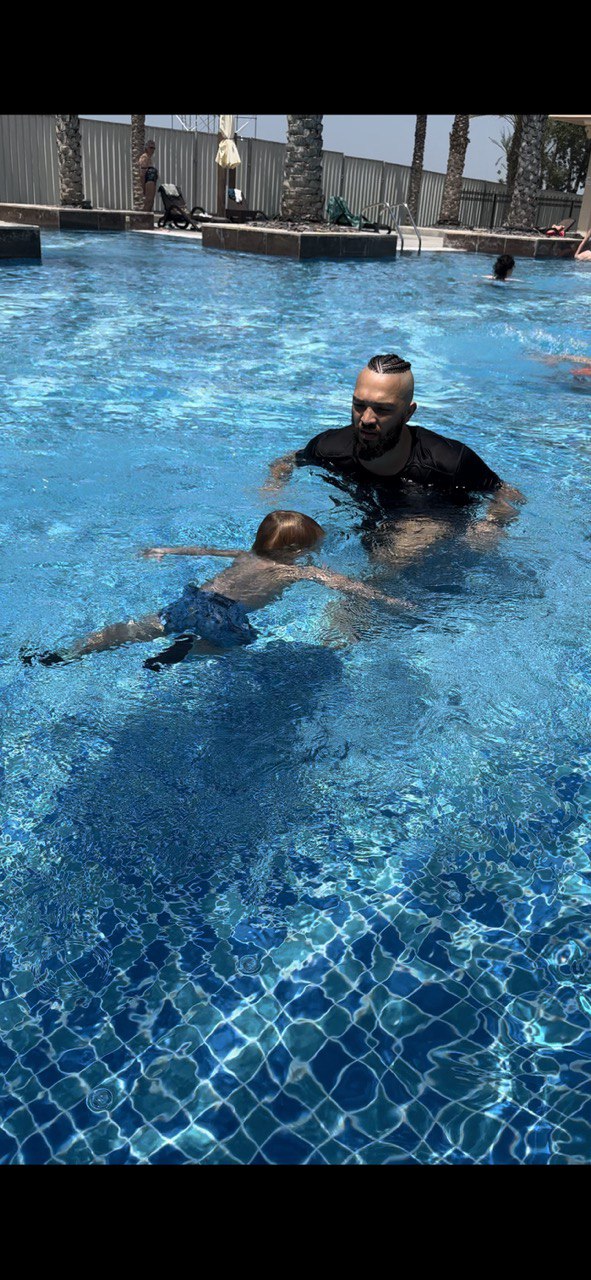
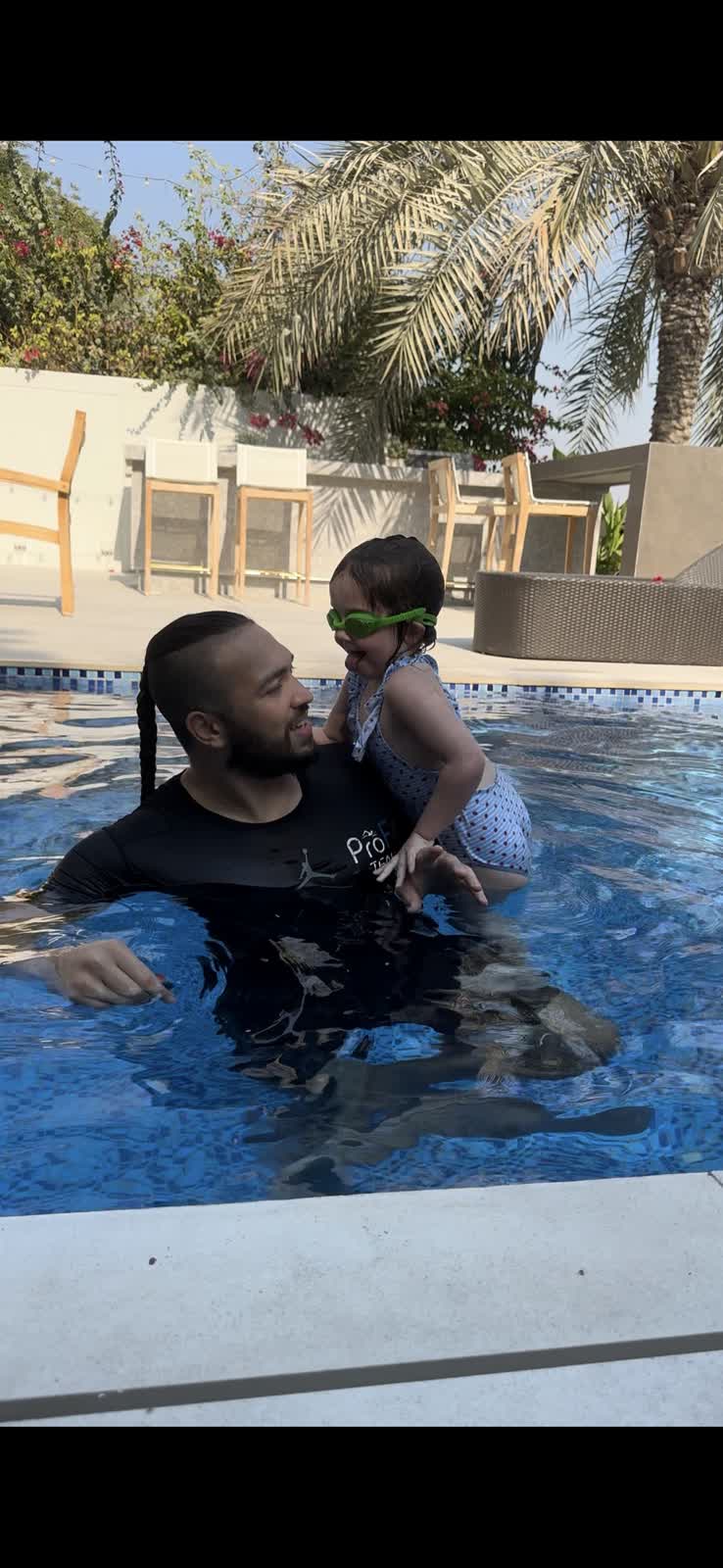
ProFit Swimming teaches babies from birth in Dubai: newborns aged 0–3 months start with supported water sessions in the family bath, then move to parent-and-baby lessons at your own pool with an STA-aligned water temperature of at least 32°C for the youngest babies. Each coach's swimming-teaching qualifications are listed in their profile, a parent is always in the water, and the first lesson is AED 99.
Why start so early: the WHO reports the highest drowning rates worldwide are among children aged 0–4, and most Dubai homes have a private or shared pool. A case-control study published in Archives of Pediatrics & Adolescent Medicine found formal swimming lessons associated with an up-to-88% lower drowning risk in children aged 1–4 — although, as the American Academy of Pediatrics stresses, no lesson makes a child drown-proof, and nothing replaces adult supervision and pool fencing.
What Does "From Birth" Actually Mean?
Most Dubai providers start babies at 3–6 months in a pool. ProFit starts at day one — because the first stage does not need a pool at all.
Home Bath Start
0 – 3 monthsThis is what 'from birth' actually means at ProFit: newborn sessions happen in your own bath, not the pool. Warm, shallow, controlled water; supported floating, gentle movement and water pours adapted from the fourth-trimester approach used by infant-aquatics educators. Baby massage and developmental gymnastics prepare each session.
Water at 32°C+, sessions short (10–20 minutes). We move to the pool when your baby is ready — typically around 3 months, always with your paediatrician's go-ahead.
First Splash
3 – 12 monthsGentle introduction to the pool for the youngest swimmers. We build a calm, positive association with the water through holds, gliding, gentle pours and skin-to-skin reassurance. Every session is led by the baby's mood, never a fixed curriculum.
Parent is always in the water. Sessions are 25–30 minutes — short by design, because that matches a baby's attention and comfort window.
Water Confidence
1 – 3 yearsAs babies become mobile, sessions add active movement: assisted kicking, reaching for the wall, and confident cued submersions. The focus shifts to the water-safety basics that matter most around Dubai's villa and apartment pools — turning back to the edge, floating, and not panicking after an unexpected entry.
Parent in the water. From around age 2½–3 most children are ready to graduate into our Toddler programme.
What Happens in a First Baby Swim Lesson?
A first session is 25–30 minutes and follows your baby, not a curriculum. Here is a typical arc — every step can stretch, shrink or stop entirely depending on your baby's mood that day.
A typical first pool session
- Before
Temperature and setup check
The coach measures the water before your baby goes anywhere near it: minimum 32°C for babies under 3 months or under 5.5 kg, minimum 30°C up to 12 months. If the pool is too cold, the session moves to the bath or is rescheduled — never forced.
- Min 0–5
Settling on the parent's chest
You enter the water holding your baby chest-to-chest. No exercises yet — the first minutes are only about warmth, eye contact and letting your baby read that you are calm.
- Min 5–15
Relaxed holds and first movement
The coach teaches you two or three supported holds — cradle hold, chin support, back-lying with head support — and your baby glides gently with you as the anchor. The coach guides your hands; yours stay on your baby.
- Min 15–25
Water pours and gentle acclimatisation
Small cupped pours of warm water over the shoulders, then the head, paired with a spoken cue. This builds the association between the cue and water on the face — the foundation for later, optional submersion work. Nothing is poured over a crying baby.
- Min 25–30
Calm exit and warm wrap
The session ends while your baby is still content — short by design. Out of the water, straight into a warm towel. Ending on a good note is what makes the next session easier, and it is why first sessions never run long.
There is no submersion in a first lesson. Submersion — if it ever happens — comes weeks later, after cue-building, and follows STA baby swimming policy: brief (about 3 seconds maximum under 12 months), rare (no more than 4 intentional submersions per session under 6 months), and always with the baby, never to the baby.
How Warm Must the Water Be — and What About Dubai Winter?
The professional standard is specific: STA guidance requires at least 32°C for babies under 3 months old or under 5.5 kg, and at least 30°C up to 12 months; UK parenting body NCT adds that baby pool water should not exceed 35°C. From roughly April to November, Dubai villa pools sit inside this band naturally — peak summer water actually reaches 32–33°C on its own.
Winter is the honest exception. From December to February an unheated Dubai villa pool tracks the seasonal air and sea temperature — roughly 22–25°C — which is 8–10°C below infant guidance. A session that would be fine in June is not appropriate in January, and a provider who does not tell you that is not protecting your baby. Here is how we handle it:
Winter options, in order of preference
- Heat the pool: a heat pump holding 30–32°C makes the villa pool baby-ready all winter
- Newborns (0–6 months): sessions move to the home bath — warm, controlled, and part of our standard 0+ programme
- Marginal temperatures (28–30°C, babies over 12 months): a neoprene baby warmsuit holds body heat; the coach shortens the session
- The coach checks the water before every winter session and will say no if it is too cold — that is part of the job, not an inconvenience
What Should a Baby Wear and What Do I Need to Bring?
Less than you might think — the pool is yours, so there is no changing-room logistics. The short list below is what the coach will actually ask for; for the full family-gear picture, see our what-to-wear guide. For the day itself, read your child's first swimming lesson: what to expect.
Baby swim checklist
- Double-layer swim nappy: disposable swim nappy underneath, snug neoprene wrap on top (the standard most instructors expect)
- Never a regular absorbent nappy — it soaks up water, gets heavy and can split open in the pool
- A baby warmsuit or wetsuit if your pool sits below ~32°C
- Warm towel with a hood, and a change mat — babies lose heat fast after leaving the water
- A feed for after the session — most babies are hungry and sleepy after swimming; there is no authoritative rule requiring a long wait after feeding before a gentle session
What Must a Parent Never Do Around the Pool?
The American Academy of Pediatrics is blunt about infants and water, and we hold every family to the same rules: never leave a baby alone or with another child in or near water — not even for a moment. When an infant or toddler is around water, a swimming-capable adult stays within arm's length, providing constant touch supervision. For villa pools, the AAP calls a four-sided fence that fully separates the pool from the house the single most important safety measure a family can install.
Myth
Babies are natural swimmers — you see them paddling underwater in videos, so a water baby is safe in the pool.
Fact
Babies are not born able to swim. The paddling is a primitive reflex that fades around 6 months; newborns cannot deliberately hold their breath or keep their head above water. Reflexes must never be relied on for safety — which is exactly why lessons focus on taught skills like turning back to the wall, under constant adult contact.
During lessons, the coach controls everything that carries risk: water temperature checks before the session, session length, and any submersion work — which is cue-based, optional and within STA limits. Your job is simpler and just as non-negotiable: hands on your baby, phone away, and never delegate watching to an older sibling.
How Does a Baby's Progress Actually Look?
Honestly: gradual, non-linear, and different for every baby. This is the usual order of the first stages – every baby moves through them at their own pace.
Typical order of the first stages
- Stage 1
Trust and settling
The win is a baby who is relaxed in the water on your chest and does not startle at pours. How long that takes differs from baby to baby, and all of it is normal.
- Stage 2
Holds and supported floating
Your baby lies back with light head support, tolerates position changes, and starts showing anticipation at the water-cue. You are confident in three or four holds without the coach's hands over yours.
- Stage 3
Cue association and readiness
The spoken cue plus water pour produces a calm blink-and-hold response. Only now — and only if your baby's cues say yes — does the coach introduce a first brief submersion, within STA limits: no deeper than needed, no longer than about 3 seconds, never more than 4 in a session under 6 months.
- Stage 4
Active water play
Kicking on cue, reaching for the wall, short supported glides between parent and coach. The amphibian-reflex paddling fades around 6 months and is replaced by taught, deliberate movement.
- Stage 5
Safety reflexes
Turning back to the wall after entry, holding the edge, back-floating with less and less support. These are the skills that matter around a villa pool — independent swimming itself comes later, at each child's own pace.
Home Pool or a Heated Swim Facility — Which Is Better for a Baby?
Your own pool wins on almost everything that matters to an infant: familiar surroundings, no crowds or noise, no shared-water hygiene load, scheduling around naps and feeds, and a parent who is relaxed because home is easy. That calm is not a luxury — a baby reads your state before they read the water.
The honest trade-off is temperature control. A commercial baby-swim facility guarantees 32°C every week of the year; your villa pool does not, unless it is heated. Our answer is the programme structure itself: newborns start in the bath (always warm), the pool takes over for the warm eight months of the year, and in winter we heat, adapt or pause rather than compromise. If a family prefers a heated facility for January and February, we will say so — the goal is a confident baby, not a booking.
Key takeaways
- From birth means from birth: newborns start in the home bath, not a pool — no other mainstream Dubai provider structures it this way.
- Water temperature is a hard rule, not a preference: 32°C minimum under 3 months, 30°C to 12 months (STA).
- An unheated Dubai villa pool in winter is roughly 22–25°C — outside infant guidance, so we heat, adapt or move the session.
- Submersion is optional, cue-based and STA-limited — never forced, never in a first lesson.
- A parent is in the water until about age 2½; a female coach is available on request.
Why Private Baby Lessons at Home
Bonding, Not Just Lessons
Baby swimming is as much about parent-child connection as technique. Private sessions at your own pool turn the lesson into a calm, shared ritual rather than a noisy group class.
Water Safety From Day One
Drowning is one of the leading causes of accidental death for young children, and the WHO reports the highest drowning rates worldwide are among children aged 0–4. Most Dubai homes have a private or shared pool. Early, regular water exposure builds the reflexes and respect for water that genuinely save lives.
Around Naps & Feeds
Babies run on tight routines. We schedule around nap times and feeds — not a fixed timetable — so your baby is always alert, fed and ready, never overtired.
Qualifications listed per coach
Teaching babies safely takes its own method: slow water familiarisation, warmth and water-safety routines. Each coach's swimming-teaching qualifications are listed in their profile; ask for the documents before the first lesson.
What age can babies start swimming lessons in Dubai?
Babies can start from birth. In practice most Dubai families begin between 3 and 6 months, once the baby holds their head steadily and the paediatrician has cleared them after routine vaccinations. There is no lower age limit imposed by the water itself — what matters is water temperature and session length. For infants under 12 months we work in water of about 32°C or warmer, which usually means a heated pool or a warm villa pool in the cooler months, and we keep the first sessions to 20–30 minutes.
A parent is in the water with the baby throughout: the first lessons build breath response, comfort on the back, and safe entry and exit, not swimming strokes. Older babies and toddlers who missed the early window are not "too late" — they simply start at a different point in the same pathway. Baby lessons run in your own pool, 7 days a week between 07:00 and 21:00, with the first lesson at AED 99.
Baby Swimming FAQ
?What age can babies start swimming lessons in Dubai?
Babies can start from birth. Most Dubai families begin between 3 and 6 months, once the baby holds their head steadily and the paediatrician has cleared them after routine vaccinations. For infants under 12 months we work in water of about 32°C or warmer and keep the first sessions to 20–30 minutes, with a parent in the water throughout. Lessons run in your own pool, 7 days a week between 07:00 and 21:00, and the first lesson is AED 99.
?What age can a baby start swimming lessons in Dubai?
From birth. ProFit's 0+ programme starts newborns (0–3 months) in your own bath — warm, shallow, controlled water with baby massage and developmental gymnastics — and moves to the pool around 3 months, with your paediatrician's go-ahead. There is no need to wait for vaccinations: STA guidance states babies can swim at any time before or after their immunisations. Most Dubai providers start at 3–6 months; starting from birth at home is what makes our programme different.
?How warm does the water need to be for a baby?
STA guidance: at least 32°C for babies under 3 months old or weighing under 5.5 kg, and at least 30°C up to 12 months — and not above 35°C. In Dubai summer most villa pools reach this easily; in winter (December–February) an unheated villa pool drops to roughly 22–25°C, which is well below infant guidance. In winter we heat the pool, move newborn sessions to the home bath, or shorten sessions with a warmsuit for older babies.
?What happens if my villa pool is too cold in winter?
The coach measures the water before every winter session. If it is below the safe band for your baby's age, the session either moves to the home bath (for babies under about 6 months), is adapted with a neoprene warmsuit and shortened (for older babies in marginal water), or we help you plan pool heating — a heat pump holding 30–32°C keeps a villa pool baby-ready all winter. We never run a full session for an infant in water below guidance.
?Is baby swimming safe? What about submersion?
Safe when done to established standards. Submersion is never forced and never a surprise: it is introduced only after weeks of cue-building, only when the baby's own signals say ready, and within STA limits — about 3 seconds maximum under 12 months, and no more than 4 intentional submersions per session for babies under 6 months. A baby who is crying, tired, hiccuping or unsettled stays on the surface, always.
?Do I get in the pool with my baby?
Yes. All baby sessions (up to around 2–2½ years) are parent-and-baby — a parent or caregiver is in the water throughout. Your presence is what makes the baby feel safe, and it lets you learn the holds and safety skills to practise between lessons. A female coach is available on request, and sessions run in English, Russian or Arabic.
?Will my baby learn to actually swim?
Not yet — and any programme that promises a swimming baby is overpromising. Babies are not born able to swim: the paddling you see in videos is a primitive reflex that fades around 6 months, and it must never be relied on for safety. At this age the goals are water confidence, safety reflexes (like turning back to the wall), breath control and joy in the water. Independent swimming comes later, at each child's own pace.
?When should a baby NOT swim?
Skip the session if your baby has diarrhoea (a swim nappy will not contain it), a fever, or is clearly unwell — an unwell baby will not enjoy the water. For ear infections: an outer-ear infection (swimmer's ear) means staying out of the pool until a doctor approves; with ear tubes or recurrent infections, ask your paediatrician first. If your baby shivers or their lips look bluish during a session, the coach ends it immediately and wraps them warm.
?What does my baby need to wear?
A double-layer swim nappy: a disposable swim nappy underneath and a snug neoprene wrap on top — the standard most instructors and pools expect. Never a regular absorbent nappy, which gets heavy and can split in the water. For cooler pools a baby warmsuit or wetsuit holds body heat. We will confirm exactly what to bring before your first session.
?How often should baby swimming lessons be?
Once a week is ideal for steady progress and for keeping the water familiar. Consistency matters more than intensity at this age — a regular weekly rhythm helps the baby remember and build on each session.
?How much do baby swimming lessons cost in Dubai?
The first lesson is AED 99. A regular single private session is AED 300, and packages bring the per-lesson rate down — see the pricing page for the full package table, including the option for two children sharing one hour.
Schools Closed? Try Active Mentor
Our swim coaches (qualifications listed per coach) become full-day mentors for your child – swimming, homework help, outdoor sports, park visits, and creative activities. From AED 55/hour on monthly packages; 4-hour session AED 400; availability is limited.
Book a Baby Swimming Trial Lesson
Babies from birth · Parent & baby sessions · We come to your pool
Popular Areas We Serve
Our coaches come to your home or building pool across 22+ Dubai communities, 7 days a week.
Ready to Introduce Your Baby to Water?
Our baby-swimming instructors (qualifications listed per coach) come to your pool in Dubai. Gentle, safe, and around your baby's schedule — first trial lesson available with no long-term commitment.
First lesson AED 99 · regular AED 300
Book Your Lesson- 4.9 rating · on Google
- 5,000+ swimmers · across Baku and Dubai
- Coach qualifications · listed per coach
- 7 days/week · 7 AM - 9 PM